
The Future of Kidswear: In Conversation with Livetrend
Children’s fashion has always existed at the intersection of creativity and practicality, but today, the forces shaping the industry are becoming increasingly complex. A new generation of parents is changing the way families discover and shop for fashion, children are becoming more involved in expressing their own identities, and digital culture is accelerating the speed at which trends move around the world. At the same time, artificial intelligence and Big Data are transforming how the industry identifies, measures, and predicts what comes next.
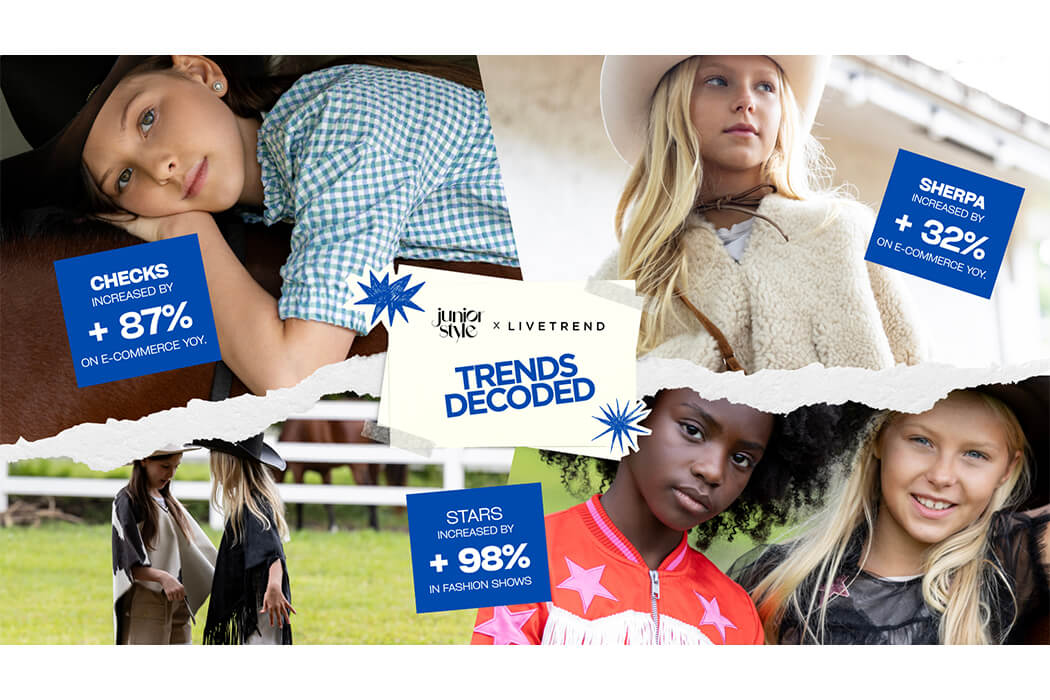
We recently had the pleasure of meeting the amazing team behind Livetrend, the Paris-based trend forecasting and market intelligence platform, and had an exciting conversation about children’s fashion, trends, innovation, and the forces shaping the future of the industry.
For Junior Style, understanding these shifts means looking beyond individual trends and asking a bigger question: where is children’s fashion heading next?
Combining AI and Big Data with human fashion expertise, Livetrend offers a fascinating perspective on how technology can help identify emerging trends while human knowledge and cultural understanding remain essential to interpreting what those trends actually mean.
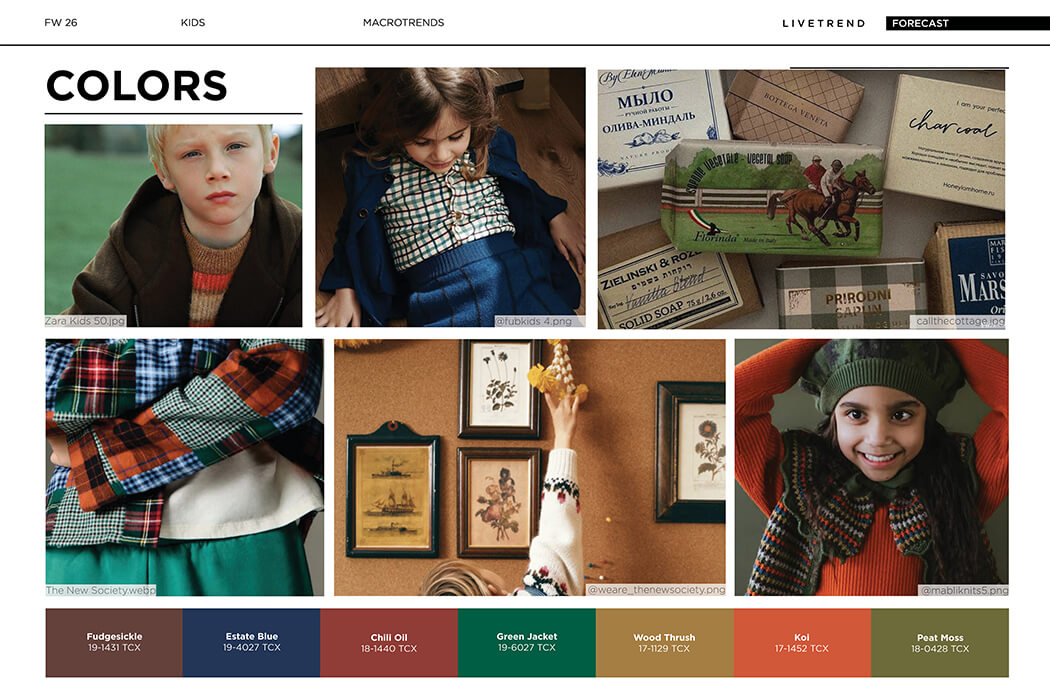
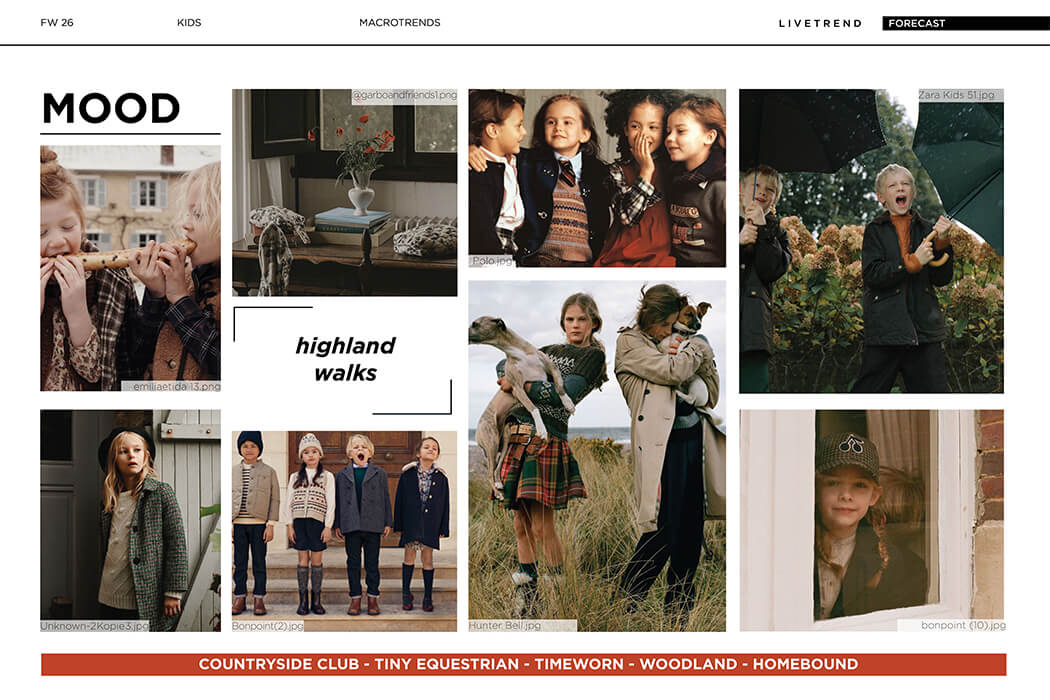
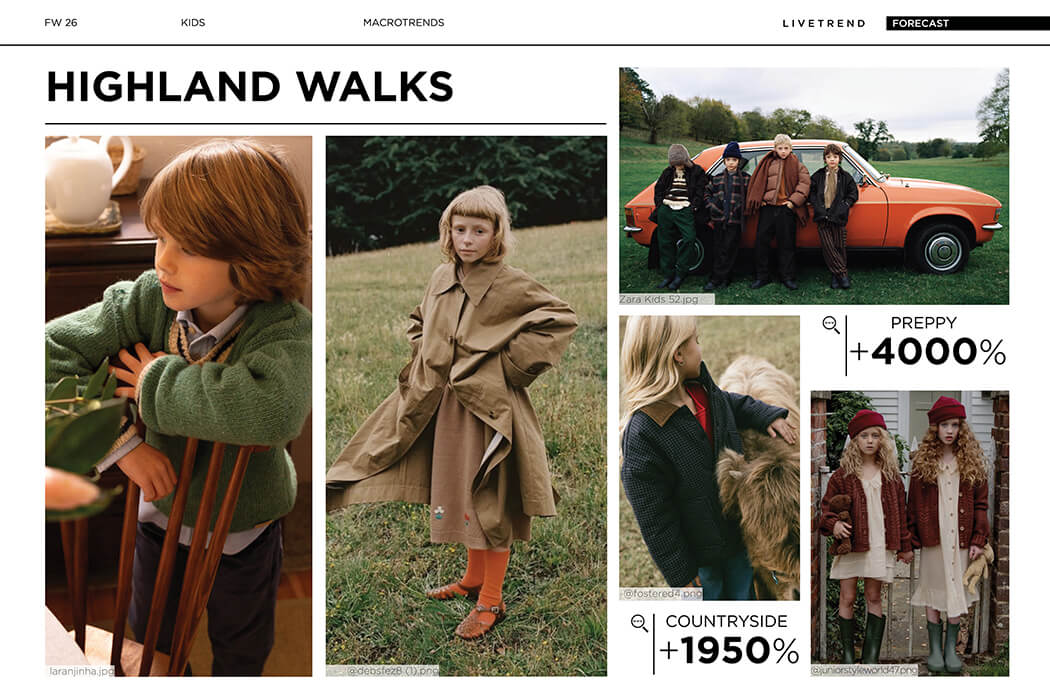
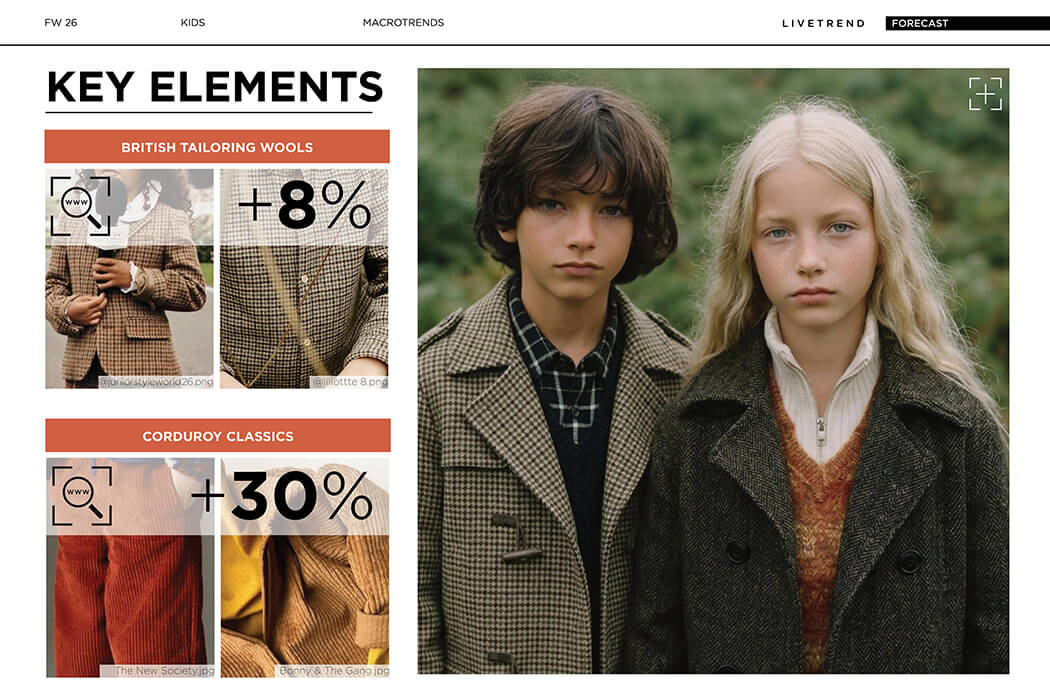
From the growing influence of Generation Alpha and Gen Z parents to emerging markets, changing consumer behaviors, storytelling, physical retail, and the return of bold, expressive aesthetics, our conversation explores the forces redefining kidswear today – and those likely to shape it tomorrowAnd as the new season approaches and the first autumn leaves begin to fall, we also take a closer look at Fall/Winter 2026, sharing Livetrend’s insights into the trends, colors, and visual directions that are about to move from forecasts into our wardrobes and onto the streets.
Kidswear is a unique segment of the fashion industry. What first attracted you to children’s fashion, and what keeps you passionate about it today?
Childrenswear is one of the most complex categories within the fashion industry. This category is unique since you have to design products for two audiences at once: the child, who wants to express their personality and the parent, who is making the purchasing decision. Finding the balance between those perspectives is both challenging and rewarding. And it is another aspect to consider when forecasting industry trends. At the same time, kidswear offers an incredible amount of creative freedom. It still allows for fashion to be fun. It unleashes more imagination, playfulness, and storytelling than any other category.
Please tell us about Livetrend. What sets it apart from other trend forecasting and intelligence platforms?
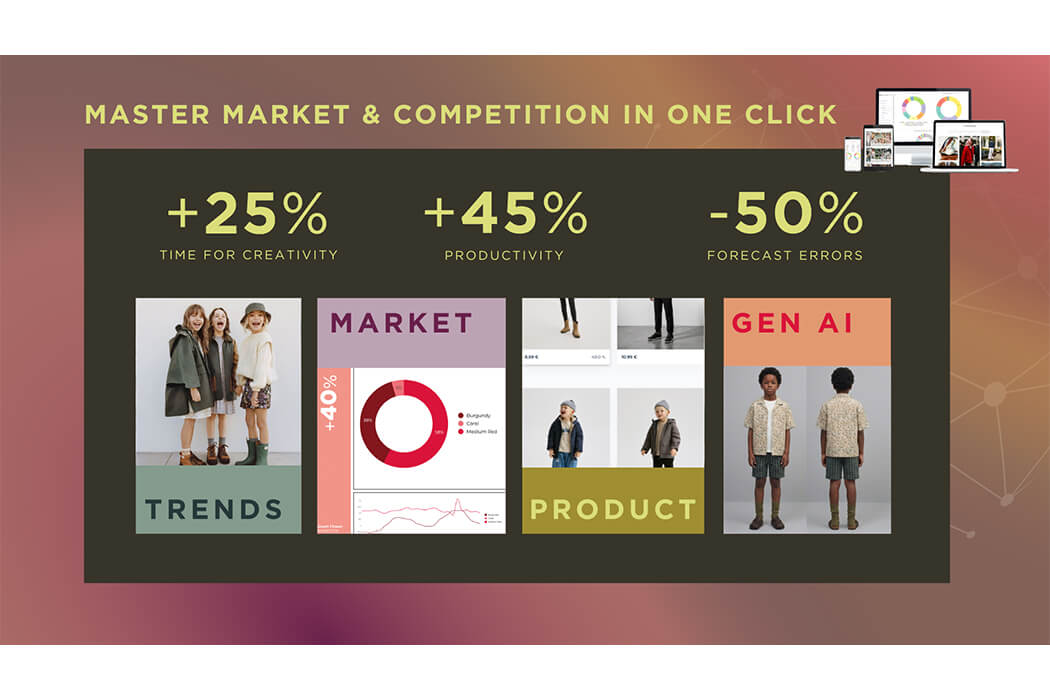
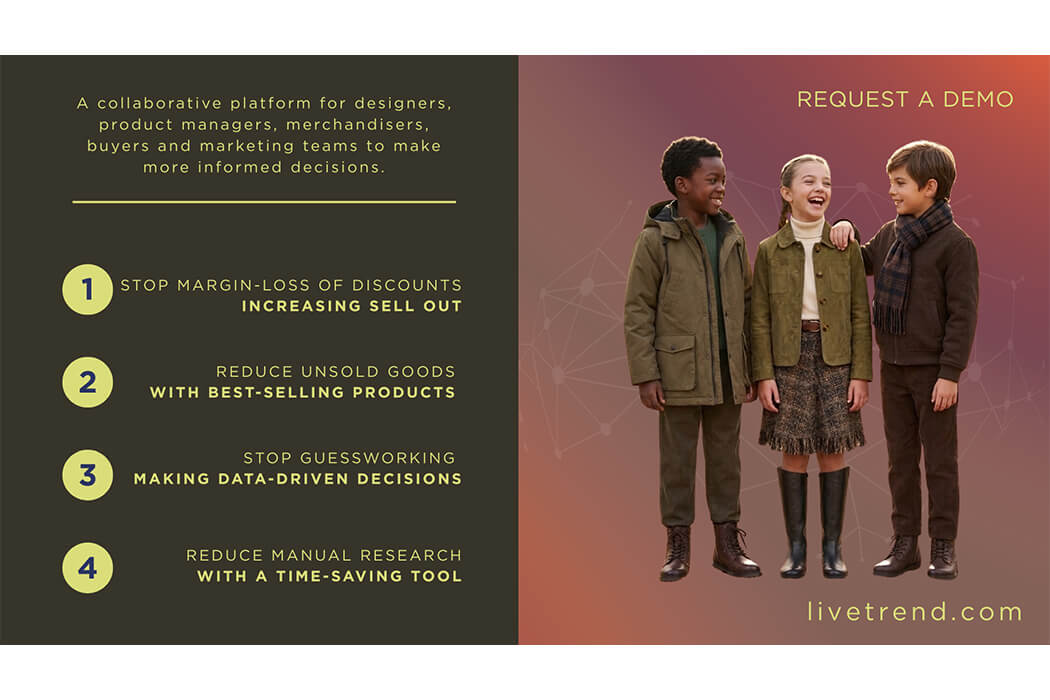
At Livetrend, we don’t see AI as a replacement for human creativity or expertise, but as a powerful tool that enhances it. We combine the power of Big Data and AI with years of fashion industry knowledge from our trend forecasting team. While our platform provides objective, data-driven insights, the final interpretation and projection of a trend is always supported by people who understand the cultural context and are able to translate data into meaningful and industry-centric business decisions. Our platform offers trend reports from 2 years in advance to more short-term market and trend updates across all segments of the industry. Another exciting possibility of our all-in-one platform is our new TrendVision tool, which allows teams to quickly test ideas with generative AI, explore different creative directions, and validate a vision before investing significant time and resources. It makes the creative process even more efficient while still leaving room for human intuition.
How has technology and artificial intelligence changed the way trend forecasting is conducted today?
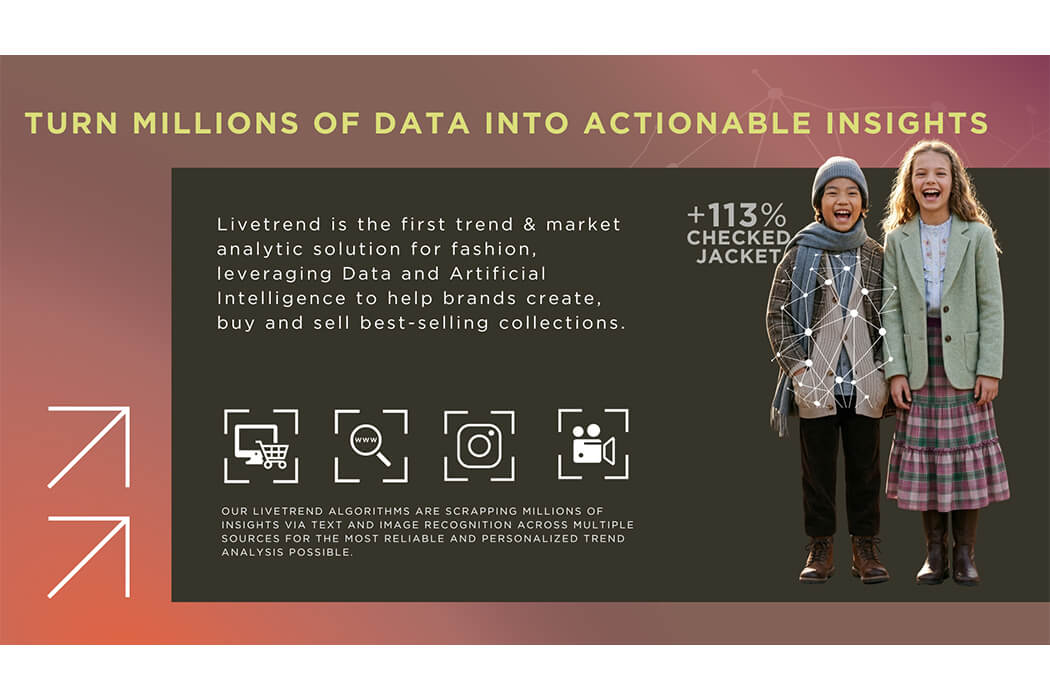
Today, we are no longer limited to traditional sources such as runway shows or editorial analysis that have relied on intuition rather than actual information. AI allows Livetrend to process vast amounts of data from social media, e-commerce, fashion shows and consumer searches in an objective way. This means we can detect emerging trends much earlier, validate them faster, and understand their commercial potential based on a trend’s quantifiable visibility and evolution following its trend curve. But while AI can identify patterns, it cannot fully interpret cultural meaning, emotional relevance, or the deeper context behind consumer behavior. This is where our human expertise remains essential, connecting the dots and translating data into actionable insights.
How do you see the children’s fashion market evolving over the next five years? What major shifts should brands and retailers be preparing for?
The children’s fashion market will be increasingly shaped by changing consumer expectations, sustainability, and digital influence. Social media will continue to accelerate trend adoption, making kidswear more responsive to fashion trends than ever before. As climate patterns become less predictable and families travel more frequently throughout the year, demand for versatile transitional clothing that can adapt across seasons and destinations will continue to grow. Looking ahead, the brands that succeed will be those that integrate experiences across both physical and digital touchpoints.
Which consumer behaviors are currently having the greatest impact on children’s fashion purchasing decisions?
Purchasing decisions are increasingly shaped by a mix of digital influence, self-expression, and a desire for individuality. Inspiration continues to come from social platforms, gaming industry, and micro-communities such as fandoms, creating a more diverse and fragmented fashion landscape. At the same time, the return of maximalism is encouraging bolder choices, with playful, expressive, and statement-driven designs. Gender boundaries in kidswear are also becoming increasingly blurred, reflecting a shift toward more inclusive styles that give children greater freedom to express their personalities.
Which emerging markets or regions do you believe will play a bigger role in shaping the future of kidswear?
The future of kidswear will be strongly shaped by emerging markets in Southeast Asia, where a young population, rising middle class, and mobile-first shopping are driving demand for clothing. India will play a key role due to its huge child population and growing premium segment, combining Western influences with traditional textiles and occasion-based dressing. Latin America, especially Brazil and Mexico, is gaining cultural influence globally, increasingly shaping aesthetics through music, media, and youth culture.
Looking ahead to Spring/Summer 2027, what key trends do you believe will shape the kidswear industry? Do you have a personal favorite trend from the season?
As we previously mentioned in relation to Latin American influence, looking ahead to Spring/Summer 2027, one of the key directional forces shaping kidswear is the growing appetite for expressive, high-energy summer aesthetics. We’re seeing a tropical landscape emerge as a defining visual code: juicy brights, fruit-market colour palettes, floral intensity, and a strong sense of escapism. Alongside this, there is a growing influence of vintage surf aesthetics, bringing a softer yet still nostalgic layer to the season, with washed tones, retro beach graphics, and a laid-back coastal attitude.
What role do storytelling and brand identity play in building a successful children’s fashion label today?
Strong brands do not just sell garments, they build worlds of values and aesthetics. In practice, this means that in a saturated market it is not the product itself but the narrative that drives recognition and customer loyalty. Just like fashion luxury brands today, which win through storytelling rather than product alone, children’s fashion brands also rely on building strong emotional narratives. As a result, the brand becomes not just a clothing supplier, but a cultural reference point and lifestyle system that customers want to return to.
What is one common mistake you see brands making when interpreting or applying trends?
A common mistake brands make when interpreting or applying trends is forgetting that the parent is also changing. Today, many new parents come from Gen Z and their expectations, lifestyles, and values around parenting are fundamentally different from previous generations. As a result, they misread trends as purely aesthetic signals rather than reflections of a new type of consumer reality. This leads to messaging and products that feel out of touch with how modern parents actually live and make decisions
Which children’s fashion brands do you feel are doing particularly interesting or innovative work right now, and why?
There are so many fantastic childrenswear brands doing interesting work right now that it’s hard to name just a few. Instead, I tend to look at specific markets from a visual perspective, as they often reveal where the most relevant innovation is happening. Two regions that I find particularly exciting are Australia and South Korea. In both cases, there is a very strong connection between aesthetics, lifestyle, and the expectations of young Millennial and Gen Z parents, who are now the key decision-makers in the kidswear space.
If you could identify one opportunity that children’s fashion brands are currently overlooking, what would it be?
One overlooked opportunity is designing collections around extremely easy mix-and-match systems, where all pieces are intentionally modular and can be effortlessly combined across seasons and occasions. Instead of highly styled, one-off looks, brands could develop a simplified core assortment that grows organically around a clear, continuous narrative.
What advice would you give to emerging children’s fashion brands trying to stand out in a competitive market?
Emerging children’s fashion brands should focus on building real-world connections with their customers beyond the digital space. Creating pop-ups and small experiential retail formats helps translate the brand into something tangible and memorable. Unexpected collaborations are also powerful, especially those outside of fashion, as they make the brand more culturally relevant and less predictable. Food is a particularly strong direction right now, since it is having a major cultural moment and naturally overlaps with lifestyle and sensory memory.
In an increasingly digital world, what role do physical events, trade shows, and face-to-face networking still play? How important are they compared to online platforms and digital communities?
In an increasingly digital world, online platforms dominate discovery, however, physical events, trade shows still play a distinct and irreplaceable role in building relationships. There is a growing craving for analog interaction, physical presence, and the ability to touch and experience a brand in real life. This is especially true not only for end consumers but also for professionals working inside the industry.
What inspires you creatively? Is there a particular place in the world that continually sparks your imagination?
At the heart of Livetrend, in Paris. Despite its reputation for being quite traditional, the city has an incredible ability to attract creative people from all over the world, creating a unique mix of perspectives, cultures, and ideas. Simply being surrounded by that energy is endlessly inspiring.
What excites you most about the future of children’s fashion?
What is most exciting about the future of children’s fashion is the emergence of a new generation of designers and the evolving perspective of children themselves. There is growing interest in understanding Generation Alpha and, soon, Generation Beta, and how their values, behaviours, and relationship with aesthetics will shape the future of the category.
What do you like most about Junior Style and its contribution to the children’s fashion industry?
Junior Style is a great space where we, as an industry, can exchange experiences and create a dedicated environment for kidswear. It’s also a strong forum and an “eye” on what is happening across many layers of the children’s fashion industry.
Discover more news, trends, stories, and insights from the world of children’s fashion at JuniorStyle.net
Visual Credits: All visual materials featured in this article were provided to Junior Style by Livetrend and belong to their respective owners and the Livetrend archives.


